

 English (UK)
  Deutsch
  Deutsch (Österreich)
 Surface Reinforcement
Reinforcement of unbound layers using geosynthetics has become a key component in creating durable, economical and high‑performance trafficked surfaces.
Benefits of Geosynthetic Reinforcement

Higher load‑bearing capacity on weak subgrades and reduced deformation

Reduction or avoidance of excavation and replacement

Lower material demand due to reduced layer thicknesses

Fast, resource‑efficient construction methods
Definition and Types of Reinforcement
In earthworks and road construction, reinforcement refers to planar reinforcement elements—such as geogrids and woven geotextiles—installed in horizontal layers to transfer stresses through interlock or friction between soil and geosynthetic. This reduces settlements, limits rutting and significantly extends the service life of trafficked areas.
Reinforcement in road construction using geosynthetics is similar in principle to reinforcement in reinforced concrete: just as steel carries tensile forces in concrete, the geosynthetic acts as the tensile element within the unbound layer. The soil, comparable to concrete, serves as the compressive element and transfers compressive forces.
A reliable mechanical interlock or frictional bond between soil and geosynthetic is essential. With geogrids this occurs through mechanical interlock within the apertures; with woven geotextiles it is achieved by shear resistance and friction. Both mechanisms enable the safe transfer of tensile forces.
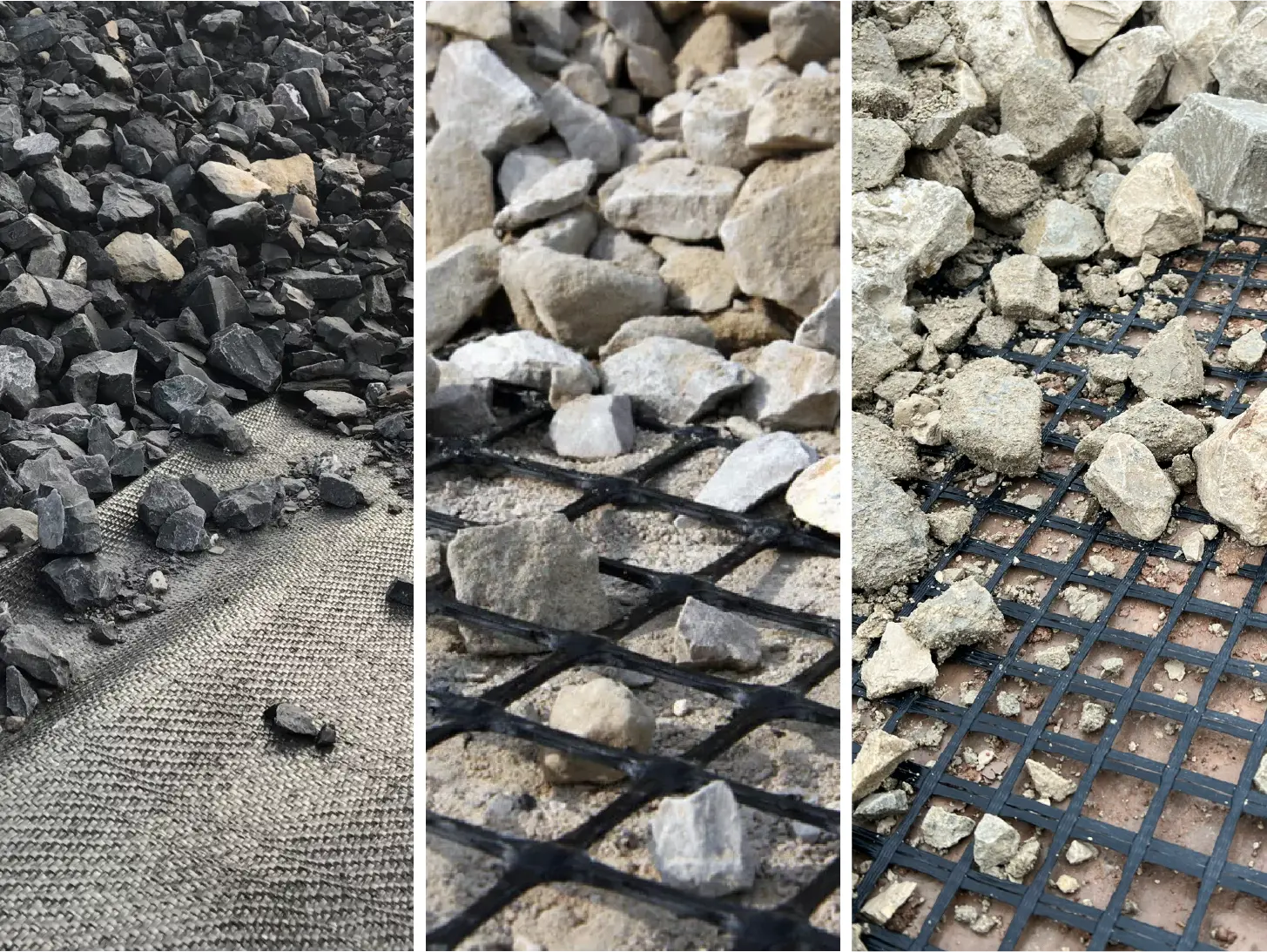
Surface Reinforcement: Function and Build‑Up

1. Unbound base course | 2. Geogrid / woven geotextile | Weak or variable subgrade
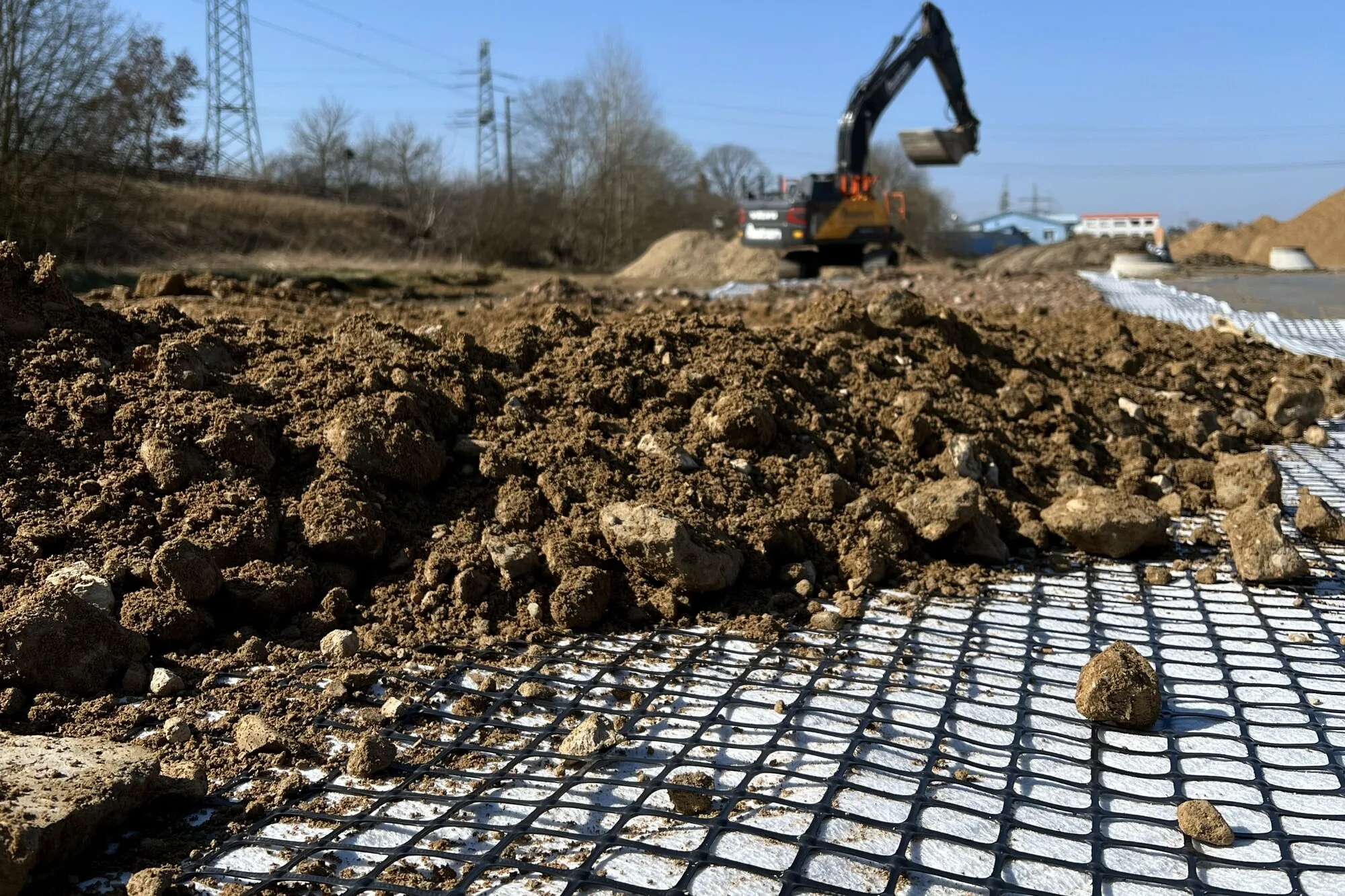
Reinforcement is required when the subgrade does not provide adequate bearing capacity to accommodate traffic loads without damage—for example on temporary haul roads, access routes, construction platforms or in road and pavement construction on weak soils.
Instead of costly excavation or soil stabilisation, a geogrid or woven geotextile is placed within the unbound layer to reinforce it.
This combination transforms a compacted aggregate layer into a reinforced system with a plate‑like load‑distribution effect and defined deformation limits.
Functional Principle of Geogrids
Stiff, monolithic geogrids such as BEGRID TG work through true mechanical interlock of the aggregate particles within the grid apertures. The stiff rib and node geometry, in combination with a suitable aggregate, promotes a stable interlock. As soon as traffic loads act on the layer, the composite of geogrid and aggregate mobilises tensile forces within the grid.
This results in: wide‑area load distribution due to high stiffness (the “snowshoe effect”), radial transmission of stresses into the grid and formation of a plate‑like structural behaviour. This allows weak or heterogeneous subgrades to be bridged effectively, making them usable for haul roads, trafficked areas or working platforms.
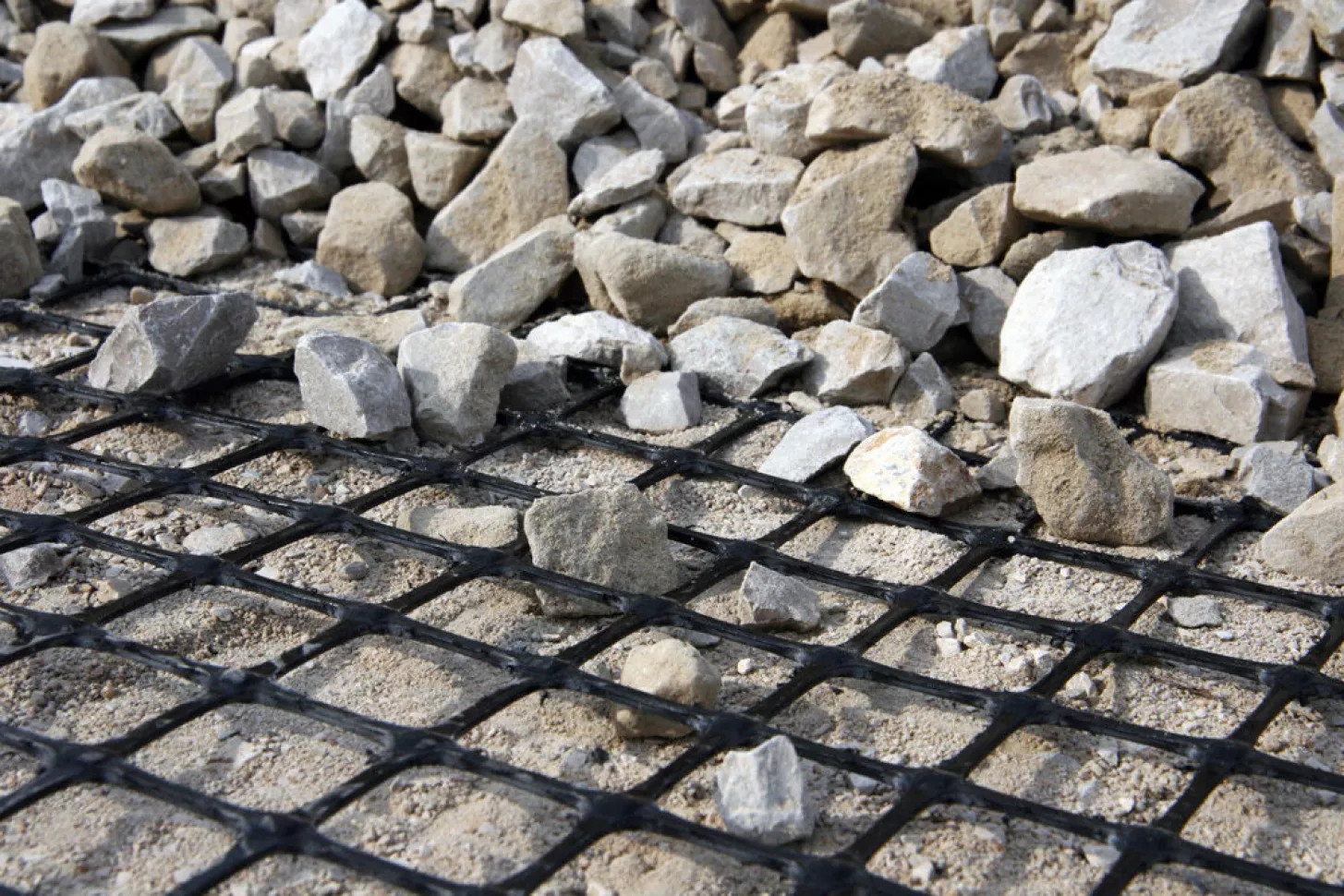
Functional Principle of Woven Geotextiles
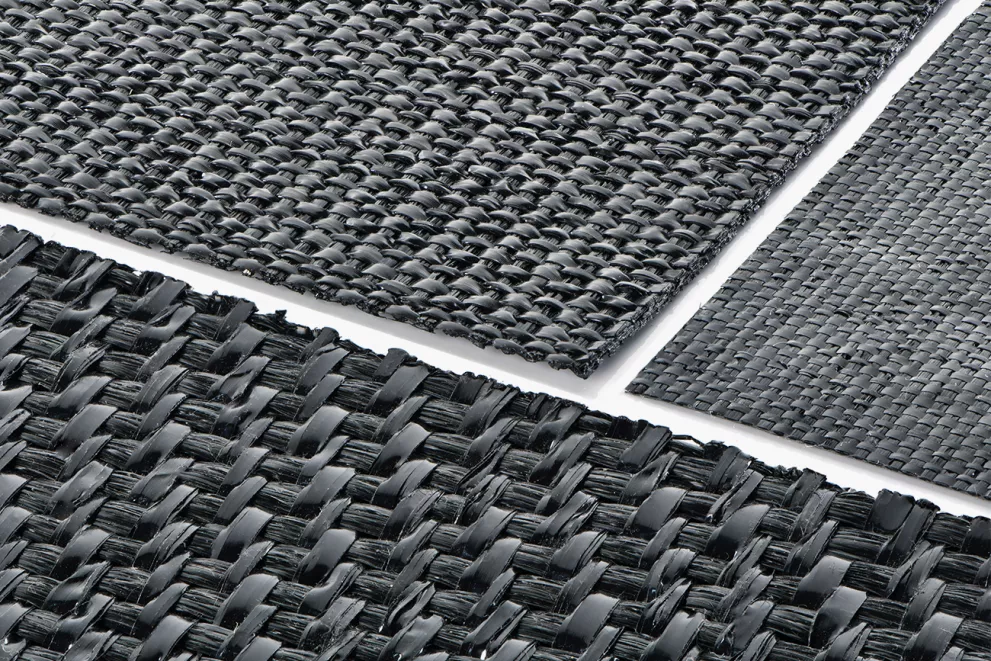
Woven geogrids such as BEGRID FLEX and woven geotextiles such as BEFORCE primarily mobilise tensile forces through friction and shear interaction between geosynthetic and soil. Unlike stiff extruded geogrids, there is no true interlock; reinforcement is achieved by tensile membrane action transmitted along the individual yarns.
Installation Using the Wrap‑Around Method: The geosynthetic is first laid out, then covered and compacted with aggregate. The free edge is then wrapped back over the initial layer and tensioned before placing the next layers. This wrap‑around installation provides effective redirection of tensile forces, significantly improving stability—especially on very weak subgrades.
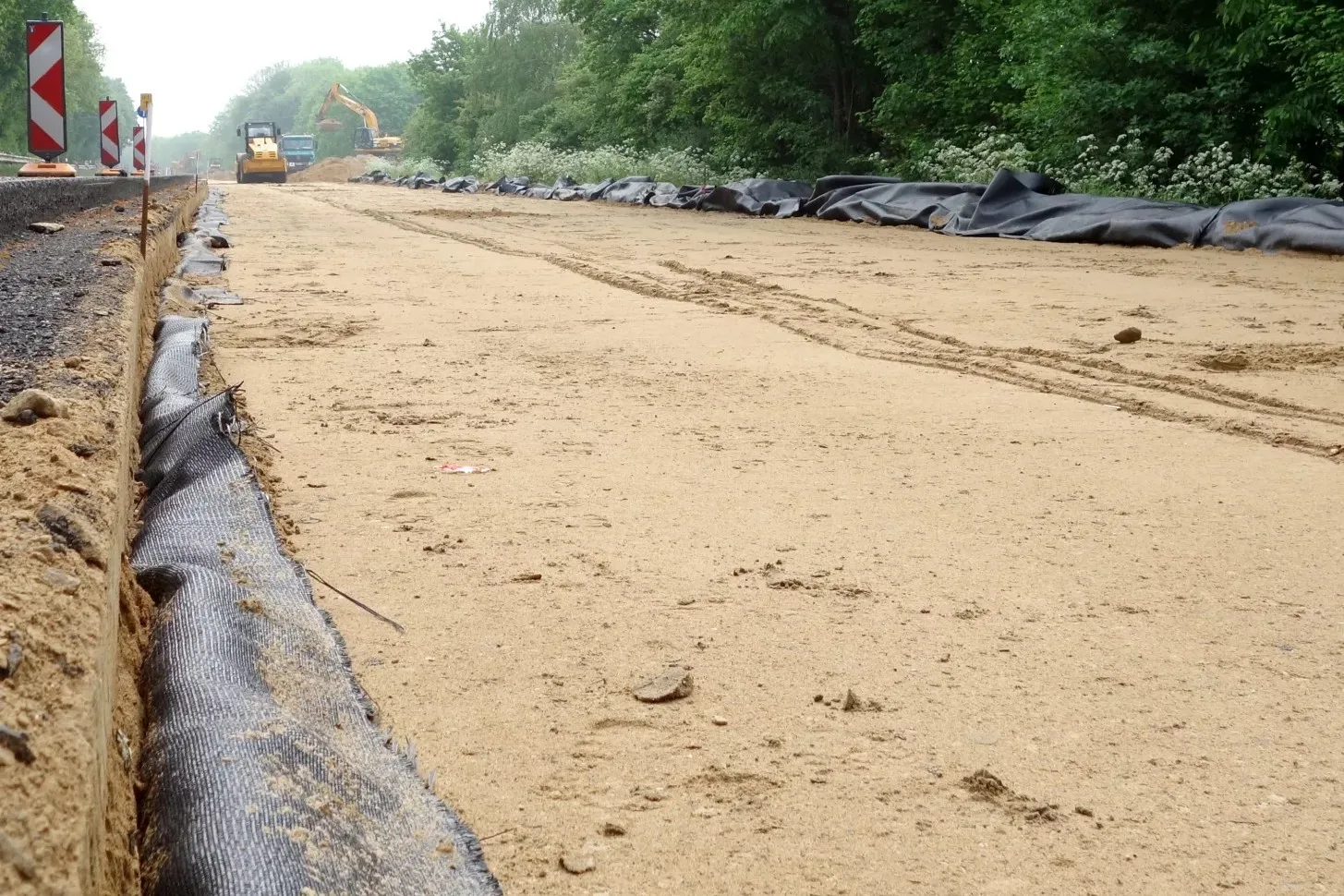

Reinforced vs. Unreinforced Base Courses
Unreinforced base courses rely solely on material quality and layer thickness. On weak subgrades this typically leads to:
- thicker base layers
- increased settlements and rutting
- higher material and transport demand
Reinforcement with geogrids or woven geotextiles enables reduced layer thicknesses (while maintaining frost resistance), limits rutting and allows required EV₂ values to be achieved with less build‑up. In many projects, excavation and material quantities can be significantly reduced.
Geosynthetic Reinforcement Products: Geogrids and Woven Geotextiles
BEFORCE Woven Fabrics
BEFORCE woven fabrics made from polypropylene tape yarns combine separation and reinforcement in a single product. Their flat, orthogonally arranged bands provide high tensile strengths in both directions while maintaining adaptability to the subgrade.
Functions:
- improve bearing capacity on weak soils
- separate aggregate from subgrade material
- reduce deformation and rutting
- are ideal for reinforcement beneath unbound layers in road and earthworks
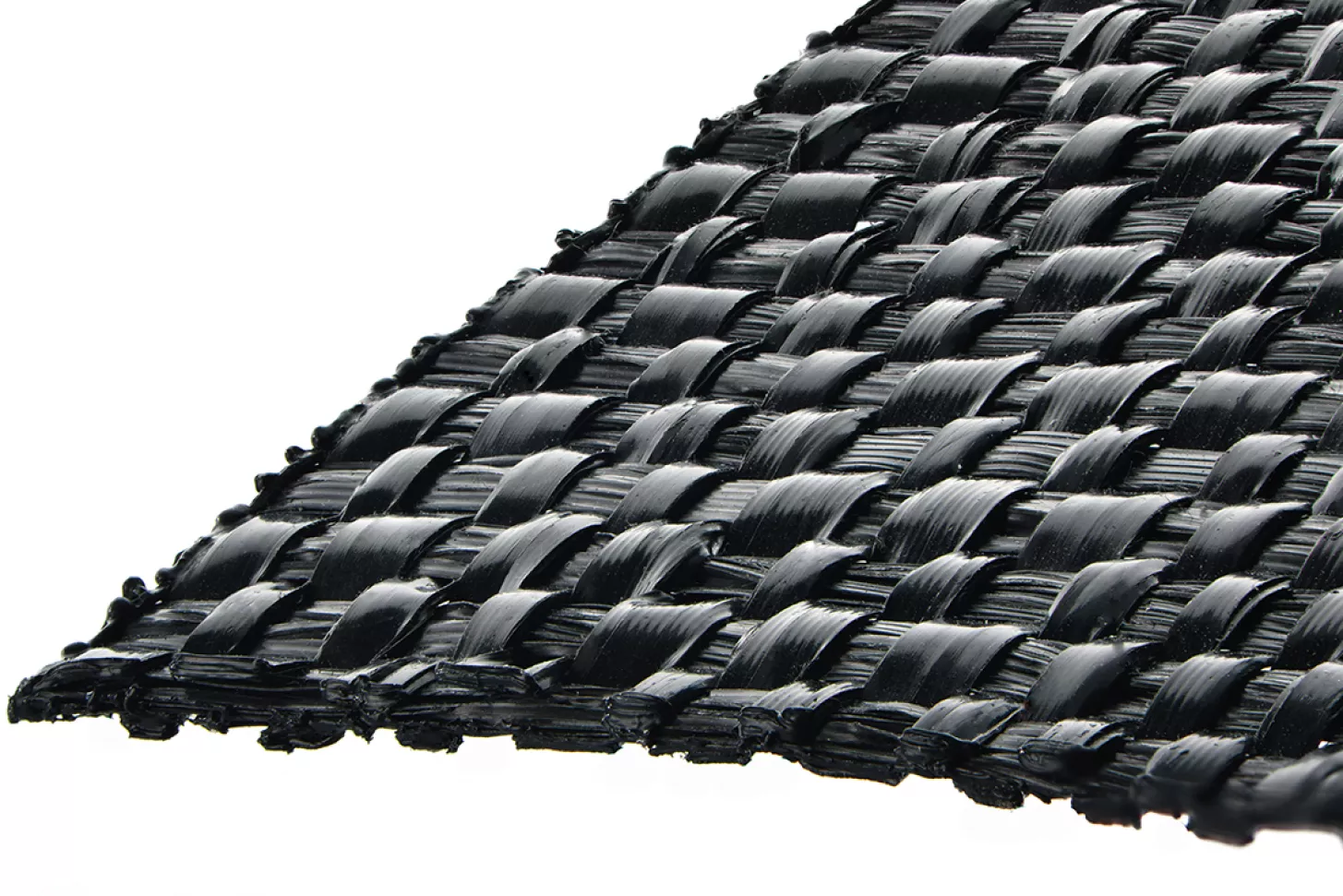


BEGRID FLEX Geogrids (woven)
BEGRID FLEX geogrids consist of high‑tenacity polyester yarns woven to form flexible, large‑aperture structures and coated for durability. Tensile strengths up to 200 kN/m are possible.
Advantages:
- high tensile strengths tailored to design requirements
- excellent soil–geogrid interaction
- flexible structure for ease of installation
Used where significant loads must be carried—e.g. industrial pavements, embankments or load‑transfer platforms.



BEGRID TG Geogrids (extruded)
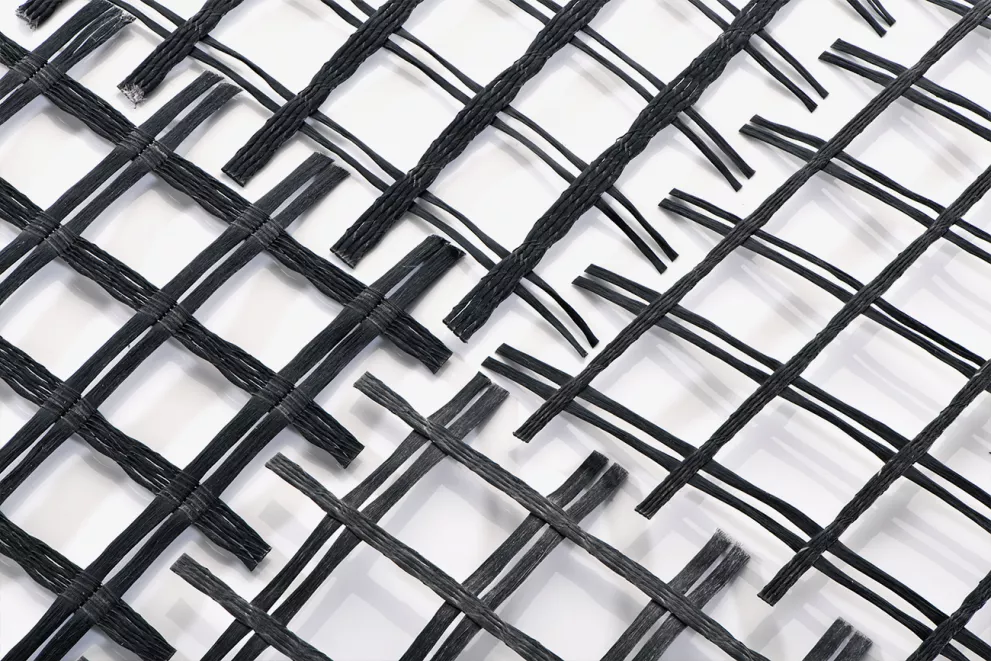
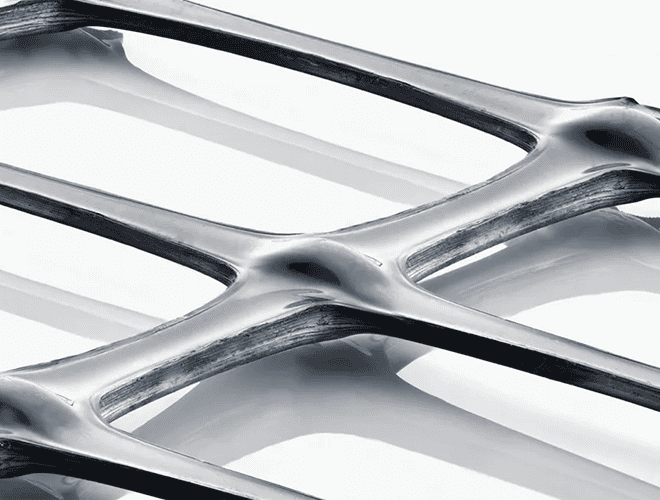
BEGRID TG geogrids are produced from high‑quality polypropylene sheets which are punched and biaxially stretched. The result is a stiff, monolithic geogrid with low elongation.
Typical properties:
- monolithic ribs and junctions without added nodes
- high stiffness and low creep
- various aperture sizes and tensile strengths for different aggregates
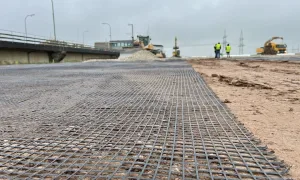
These reinforcement products are particularly suitable for weak subgrades in earthworks, road construction and trafficked areas where secure load transfer is required.



Geocomposites with Nonwoven: Reinforcement, Separation and Filtration
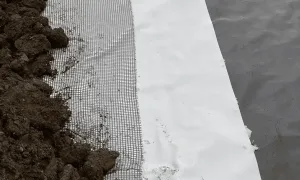
Where separation and filtration are needed in addition to reinforcement, geocomposites—geogrids bonded to nonwoven geotextiles (e.g. BEGRID TGV)—are used.
They provide:
- reinforcement: load distribution and increased bearing capacity
- separation: prevention of intermixing between soil and aggregate
- filtration: controlled water flow without soil loss
They also reduce installation time by replacing two separate layers with one composite.




PARAGRID / PARALINK Geogrids (laid)
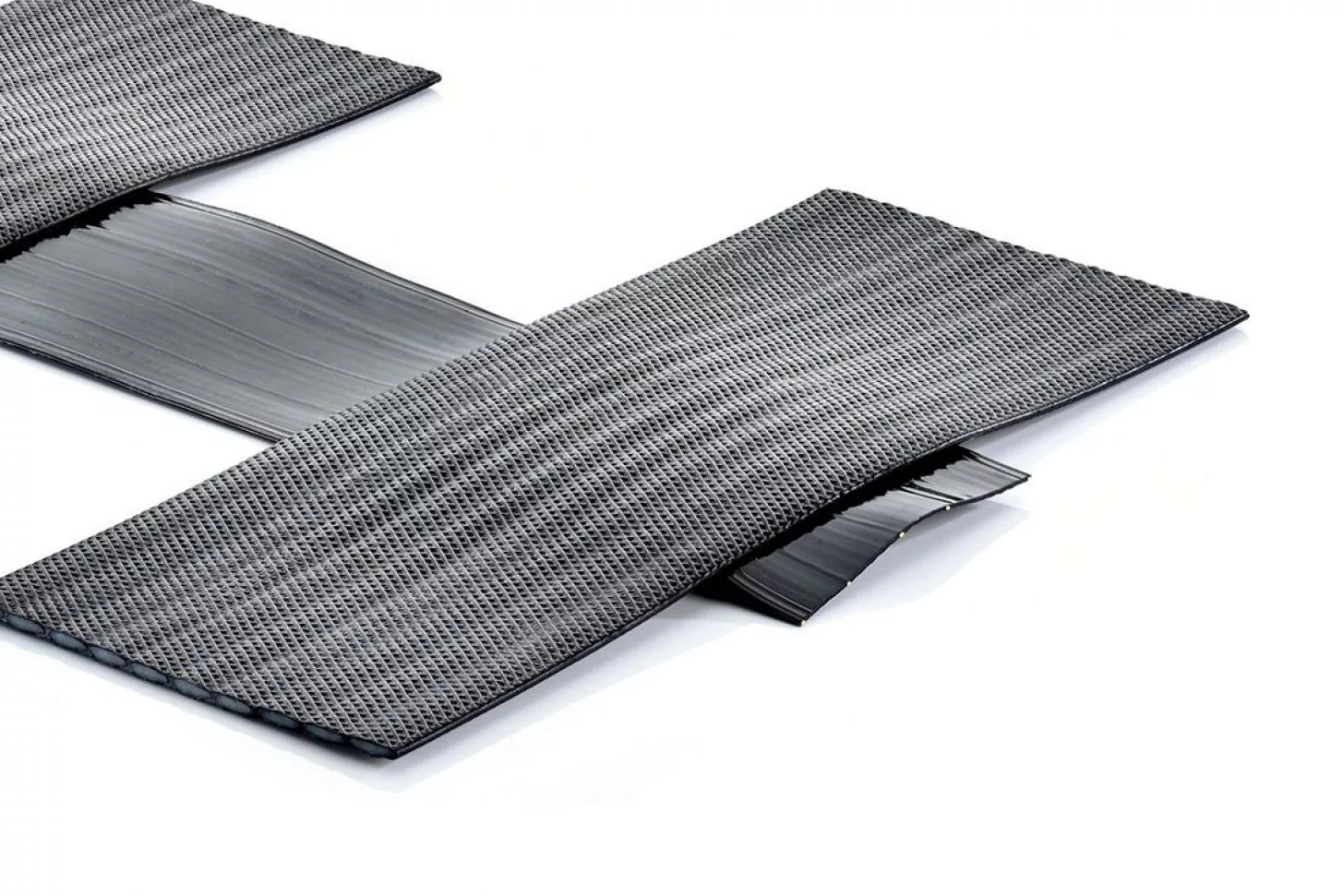
PARAGRID and PARALINK are laid, welded geogrids made of high‑tenacity polyester strands coated with LDPE. These grids achieve extremely high tensile strengths and are used for demanding reinforcement applications such as load‑transfer platforms, bridge abutments or heavily loaded working areas.
PARAGRID and PARALINK complete the portfolio of reinforcement products for specialised applications.
Applications of Reinforcement in Earthworks and Road Construction
Construction Roads and Temporary Working Platforms
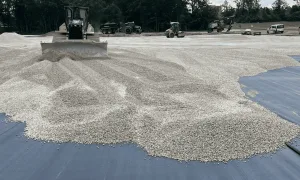
On weak soils, geogrids, woven fabrics and geocomposites enable rapid construction of traffickable surfaces, even under heavy plant. Reinforcement increases bearing capacity without the need for extensive excavation.
Road & traffic route construction
Reinforcement improves load distribution within unbound layers, reduces rutting and extends the service life of roads, paths, car parks and verges—especially where structural depth is limited.
Railway Construction
Reinforcement ensures consistent bearing capacity, controlled deformation and efficient layer thicknesses in highly loaded areas such as rail infrastructure, industrial yards and storage depots.
Subgrade Stabilisation
On soft, organic or highly variable soils (e.g. silt, peat, clay), reinforcement combined with geocomposites provides a stable working platform and long‑term load transfer without extensive soil replacement.
Design and Planning of Reinforced Base Courses
Reinforced base courses follow the same design principles as conventional unbound layers, supplemented by the effects of reinforcement.
Key Design Parameters
- subgrade bearing capacity (e.g. EV₂ or CBR)
- anticipated traffic loading
- required service life and safety factors
- frost resistance and layer thicknesses
- selection of aggregate (gradation, compaction, drainage)
The relevant guidelines and technical regulations define the areas of application and the load conditions for geogrids and woven geotextiles.
SUPPORT AND TECHNICAL ASSISTANCE
- in selecting appropriate reinforcement products
- design recommendations in line with applicable standards
- system‑oriented solutions with matched products
- On-site briefings and supervision
Standards and Guidelines (e.g. M Geok E, RStO)
- M Geok E – German guideline for the use of geosynthetics in road earthworks
- RStO, ZTVE‑StB and other national road‑construction standards
- project‑specific requirements from authorities or asset owners
Our reinforcement products are aligned with these requirements and classified accordingly.
Economy and Sustainability of Reinforced Base Courses
Savings in Material, Construction Time and Cost
Using geogrids, woven fabrics or geocomposites can:
- reduce base layer thicknesses
- avoid or minimise excavation and replacement
- shorten construction periods
- reduce transport volumes and associated costs
Resource Conservation and CO₂ Reduction
Less excavation, less import material and fewer transport movements mean a better environmental footprint. Geosynthetic reinforcement contributes to sustainable infrastructure construction.

Tailored Support for Your Reinforcement Project
Contact us for efficient and durable reinforcement solutions using geosynthetics. We provide expert support, product selection and technical guidance to ensure the economic and structural success of your project.
FAQ: Reinforcement, Base‑Course Reinforcement and Geosynthetic Products
When is reinforcement with geogrids or woven geotextiles necessary?
Reinforcement is required whenever the subgrade does not meet the necessary bearing capacity or when layer thicknesses must be limited. Typical applications include haul roads, access routes, car parks, industrial areas or roads on weak soils.
Which reinforcement products are suitable for base‑course reinforcement?
Depending on subgrade, traffic load and structural depth:
- BEGRID TG or BEFORCE for classic base‑course reinforcement
- BEGRID FLEX or laid geogrids such as PARAGRID / PARALINK for higher tensile strengths or demanding applications
- geocomposites (geogrid + nonwoven) where separation and filtration are also required
How is base‑course reinforcement designed in practice?
Design is based on subgrade bearing capacity (e.g. EV₂), expected traffic loading, required bearing capacity at the top of the unbound layer, planned layer thicknesses and properties of the reinforcement product. Design follows the relevant standards, and project‑specific recommendations are available from our technical team.
Further information about:
Surface Reinforcement


Surface Reinforcement
Further applications
Anwendungstechnik Geobaustoffe
Sebastian Schiller
MSc. Geow.
 +49 (0) 911 64200-29
 sebastian.schiller@beco-bermueller.de