

 English (UK)
  Deutsch
  Deutsch (Österreich)
 BEBIT Asphalt Reinforcement Grids
BEBIT asphalt reinforcement specifically strengthens asphalt layers, reduces crack formation, and extends the service life of roads – even under heavy traffic and high load conditions.
Your advantages

Reinforcing effect

Fast and cost-effective to lay

Reduces rehabilitation costs in the long term
General
Der überwiegende Teil der Straßen im klassifizierten Straßenbau wird mit Asphaltdecken ausgeführt. Durch stetig steigende Verkehrs- und Schwerlastbelastungen kommt es dabei zunehmend zu vorzeitigen Schäden, verkürzten Wartungsintervallen und Einschränkungen der Gebrauchstauglichkeit. Um diesen Beanspruchungen dauerhaft entgegenzuwirken, werden seit vielen Jahren technische Textilien wie Asphaltarmierungsgitter eingesetzt, die sich im Asphaltstraßenbau bewährt haben und die Grundlage der Produktreihe BEBIT bilden.
BEBIT G is a grid that has high tensile strength and is made of glass fibres with a melting point above 850 °C. The fibre bundles are encased in a bitumen coating. BEBIT G Asphalt Reinforcement Grids have an extremely high constrained modulus that allows the immediate absorption of high tensile forces with minimum elongation. This results in the stresses being concentrated in the asphalt inlay and its reinforcing function is instantly activated. The open structure of BEBIT G grids ensures optimum bonding between the layers.

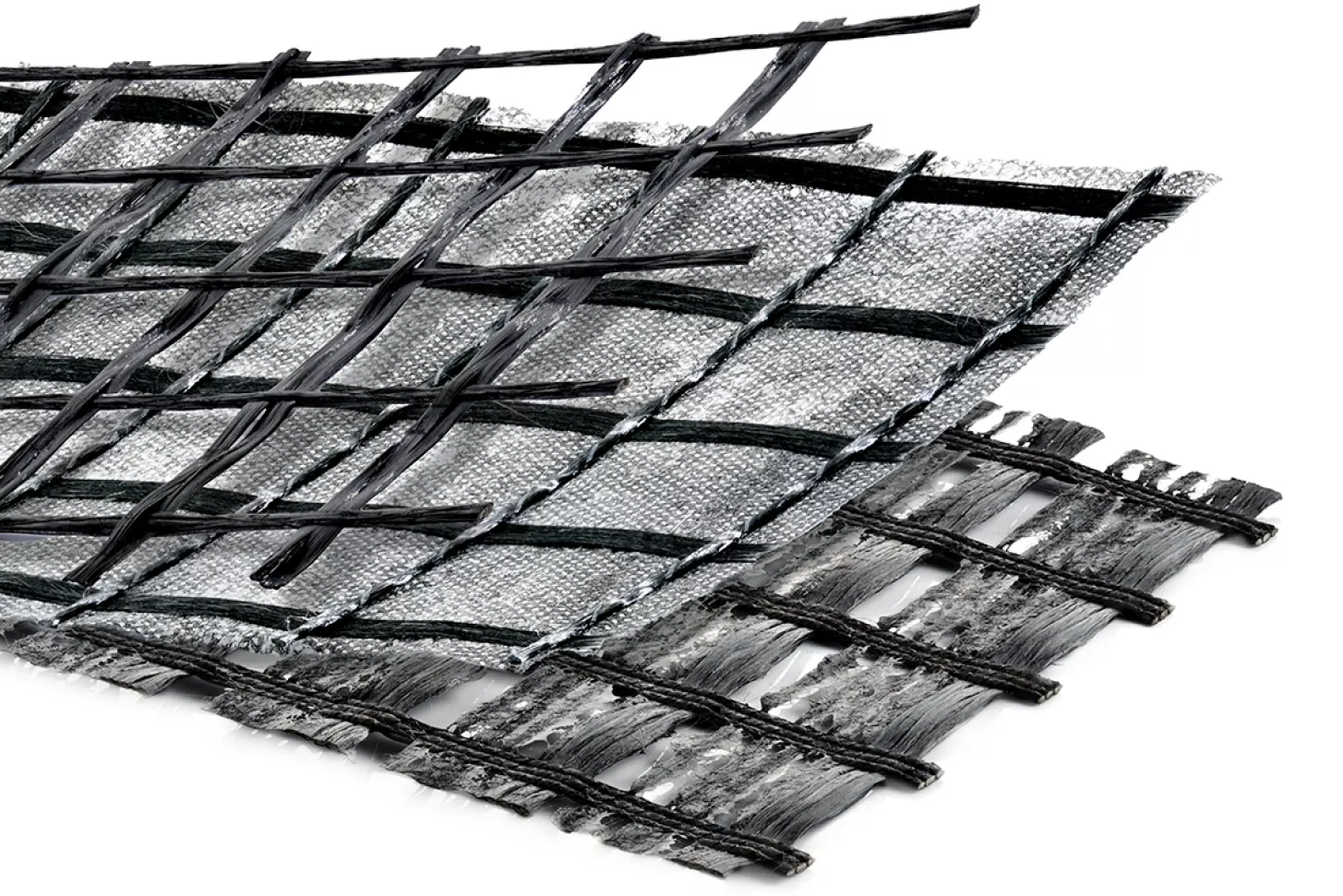
Top: BEBIT G | Centre: BEBIT G BC | Bottom: BEBIT G Plus
Asphalt reinforcement grid with additional installation aid
BEBIT G plus and BEBIT G BC are asphalt reinforcement grids from the BEBIT G range with an additional laying aid. In the case of BEBIT G Plus, the laying aid comprises an additional mesh infill made of fine glass roving. BEBIT G BC, on the other hand, has a laying aid made of light-weight, non-woven fabric.
A laying aid ensures maximum possible contact with the bituminous subsurface, keeps the grid firmly in position and makes installation more cost-efficient. No additional bitumen emulsion or otherwise customary spreading of chippings is necessary.
Functions
Reinforcement
 BEBIT asphalt reinforcement grids are reinforcement products. The grid acts as a reinforcing element that absorbs the forces in the area of loading and thus effectively delays crack development. The resulting fatigue resistance is greater than that of a non-reinforced asphalt layer. The reinforcement grid improves the load-bearing capacity of the entire pavement system, slows down the propagation of cracks from the substrate and significantly extends the useful life of the asphalt surface.
Applications
BEBIT asphalt reinforcement grids are used:
- for the renovation of asphalt-bound traffic surfaces with different crack patterns (transverse, longitudinal and network cracks)
- to prevent reflection cracks
- for the renovation of concrete carriageways (on bituminous levelling course)
- for the superstructure of connections, seams and joints

Road widening
- New asphalt surfacing layer
- BEBIT Asphalt Reinforcement Grids
- Existing or milled asphalt base layer
- Regulating course, if required
- Unbound sub-base
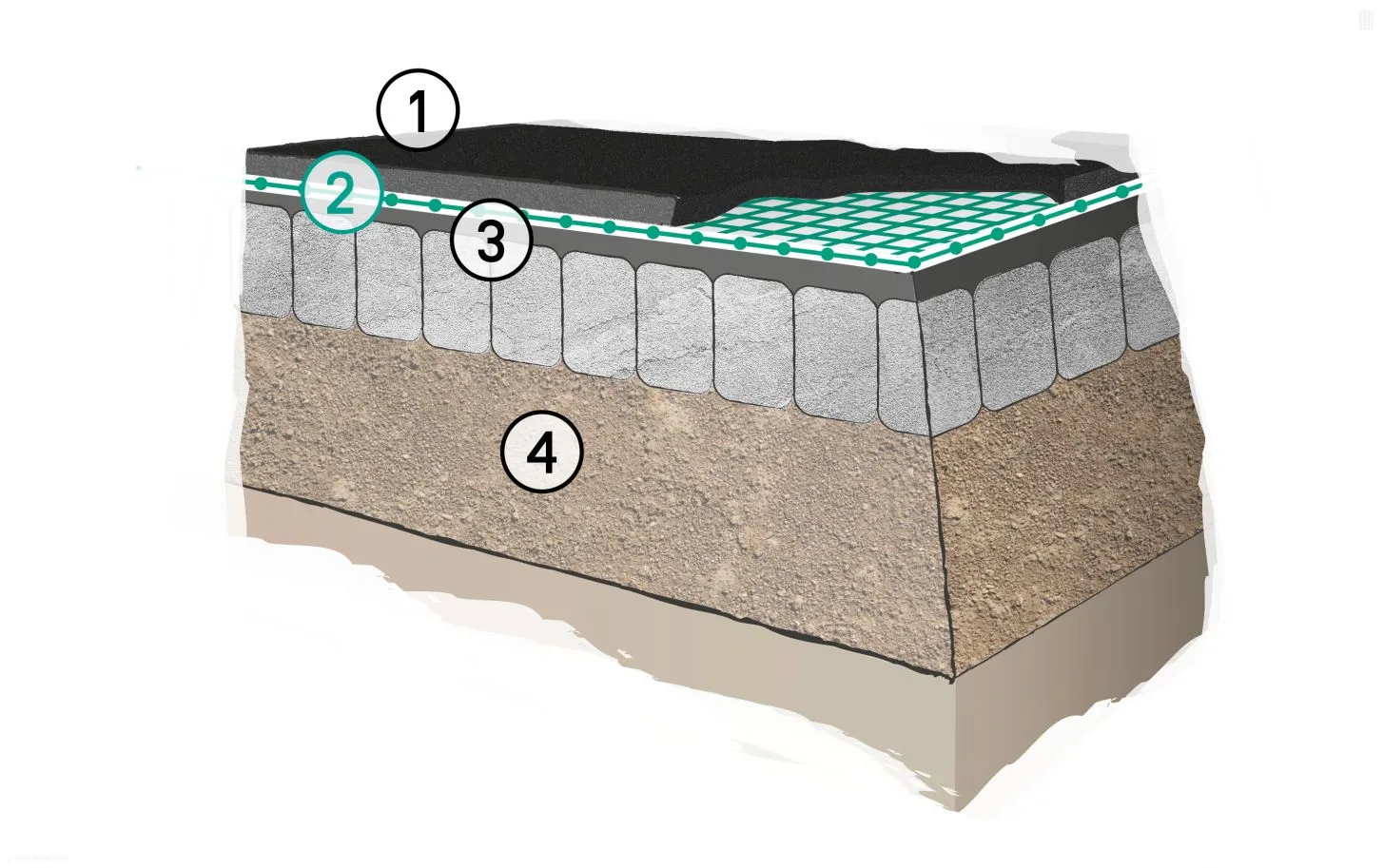
Overbuild of paved areas
- New asphalt surfacing layer
- BEBIT Asphalt Reinforcement Grids
- Regulating course
- Unbound sub-base

Rehabilitation of bituminous road surfaces
- New asphalt surfacing layer
- BEBIT Asphalt Reinforcement Grids
- Regulating course, if required
- Existing or milled asphalt base layer
- Unbound sub-base
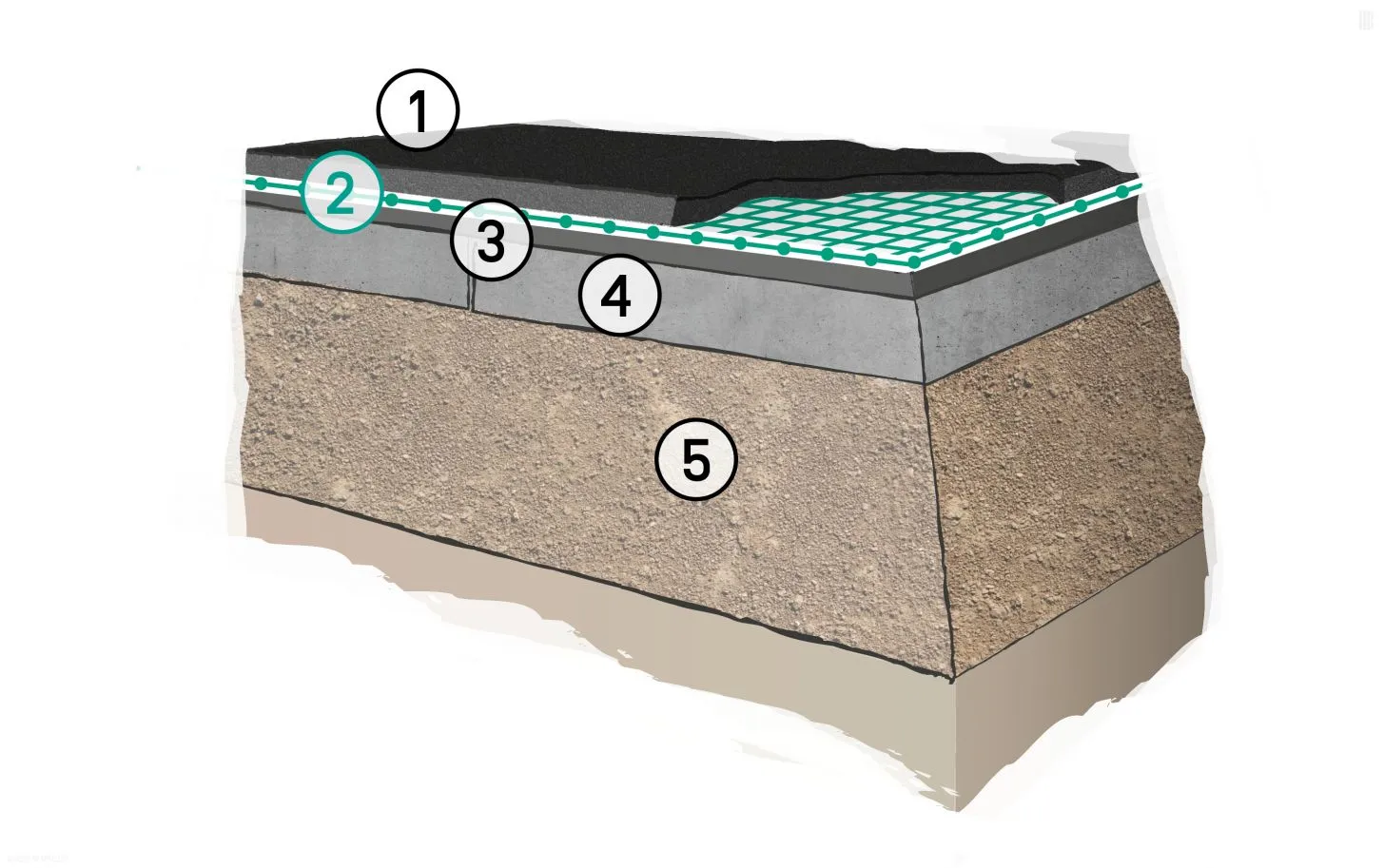
Rehabilitation of concrete roads
- New asphalt surfacing layer
- BEBIT Asphalt Reinforcement Grids
- Bituminous regulating course
- Existing concrete road pavement
- Unbound sub-base
Data
| Properties | G 50 | G 100 | G 120 | G 50 plus | G 100 plus | G 120 plus | G 50 BC | G 100 BC | G 120 BC |
|---|---|---|---|---|---|---|---|---|---|
| Product type | Asphalt reinforcement grid with bitumen coating | ||||||||
| Additional laying aid | without | Mesh infill | Non-woven fabric | ||||||
| Raw material | Grid: glass | Grid: glass Mesh infill: glass |
Grid: glass Non-woven fabric: PP |
||||||
| Maximum tensile strength longitudinal (kN/m) | 50 | 100 | 120 | 50 | 100 | 120 | 50 | 100 | 120 |
| Maximum tensile strength transverse (kN/m) | 50 | 100 | 120 | 50 | 100 | 120 | 50 | 100 | 120 |
| Areas of application | |||||||||
| Road and traffic areas |
● | ● | ● | ● | ● | ● | ● | ● | ● |
| Aircraft operation areas | ● | ● | ● | ● | ● | ● | |||
Installation

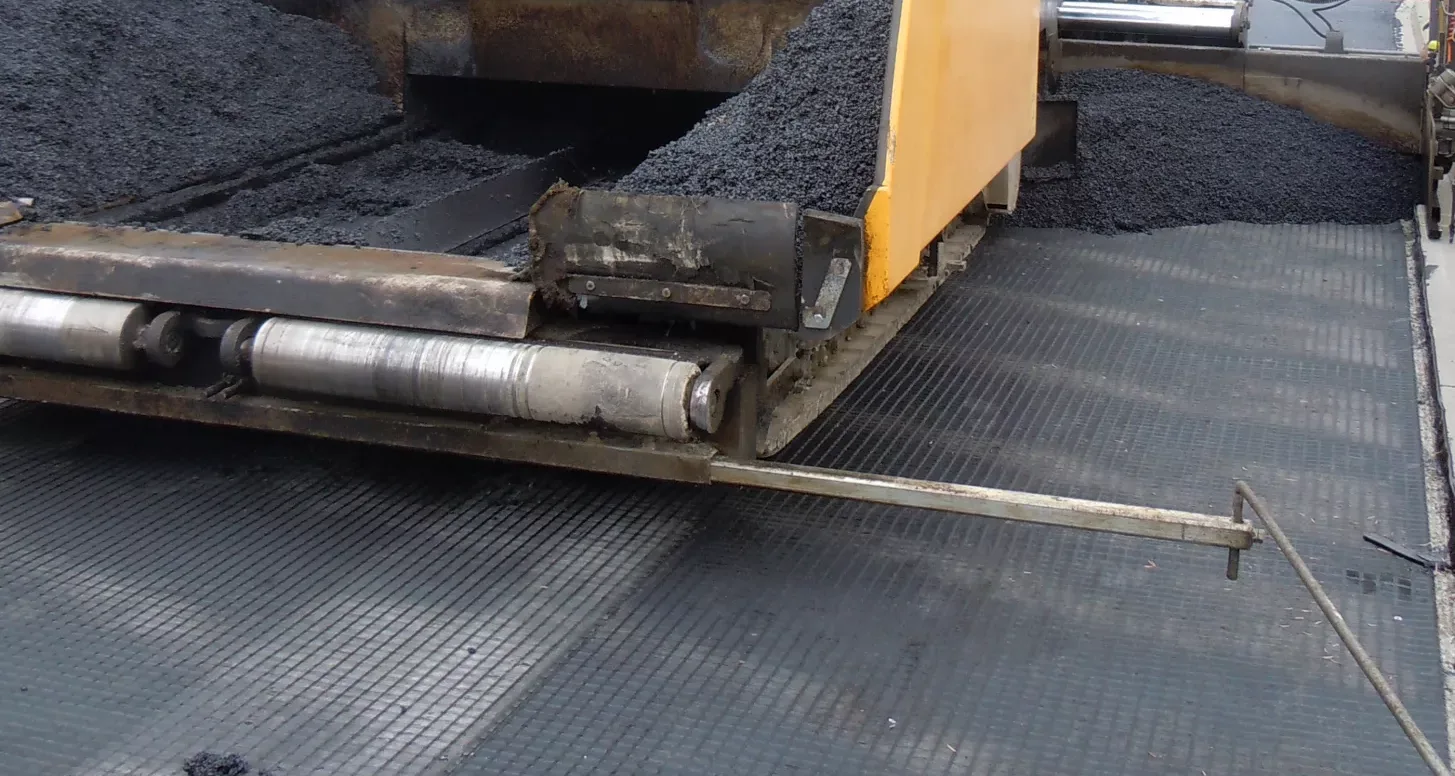
- Prior to installation the eveness of the installation surface must be checked and the substrate cleaned. If any cracks, joints or other openings become visible, these must be filled.
- The subsurface temperature must not be less than 5 °C and the air temperature must be at least 10 °C during installation.
- BEBIT asphalt inlays must be laid into the bitumen emulsion layer after the emulsion has broken. They must be laid in dry weather only and without creasing.
- Immediately before the asphalt reinforcement is laid, the road surface is first sprayed with a Class C70BP 3-OB-1 polymer-modified bituminous emulsion tack coat, in accordance with TL BE StB 07. Good experience has also been had with Class C70BP 3-OB-2 emulsions. If any other type of emulsion is to be used, this must be tested in advance to make sure that good bonding with the supporting layer is achieved.
- A road surfacing layer of at least 40 mm must be laid on top of the asphalt inlay immediately after the bitumen emulsion has dried.
Our detailed installation and laying instructions for BEBIT Asphalt Reinforcement Grids must also be observed.
Advantages
- Improves usability of asphalt-bound traffic surfaces
- Reinforcing effect
- Complete solution with functional reliability
- Good milling properties
- Milled material can be completely recycled
- Fast and cost-effective to lay
- Extends the maintenance intervals
- Reduces rehabilitation costs in the long term
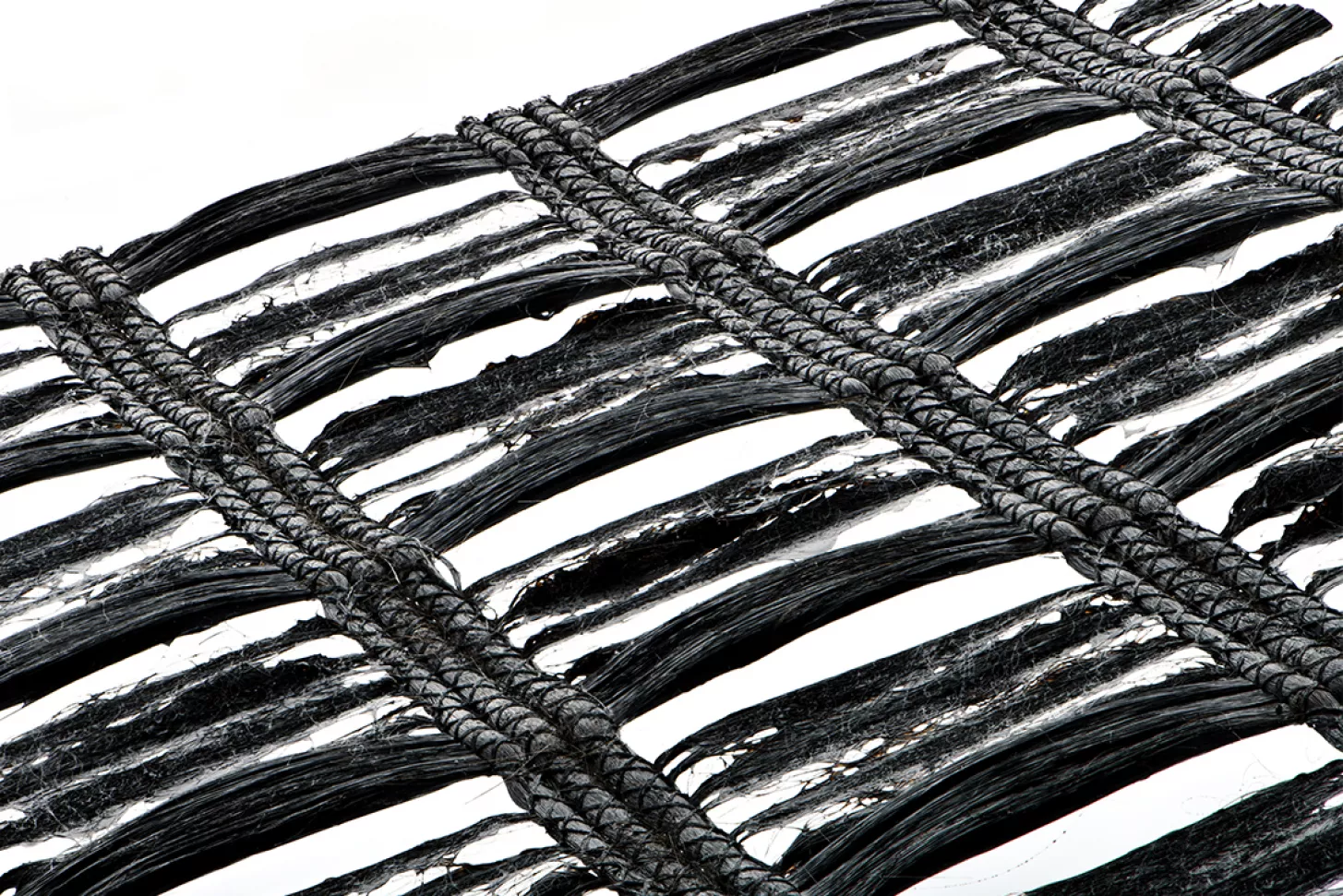
Gallery







Further information about:
BEBIT Asphalt Reinforcement Grids
BEBIT Asphalt Reinforcement Grids
| BEBIT Asphalt Reinforcement Grids | |
|---|---|
| BEBIT Asphalt Reinforcement Grids Product Brochure
| Download |
Further applications