

 English (UK)
  Deutsch
  Deutsch (Österreich)
 BECLAY Geosynthetic Clay Liners
BECLAY geosynthetic clay liners (GCLs) combine the natural sealing properties of bentonite with the durability of high-quality geotextiles, ensuring long-term, reliable sealing performance in landfill, road, and hydraulic engineering applications.
Advantages of BECLAY Geosynthetic Clay Liners

Good sealing performance with self-healing effect

Strong composite bonding through full-surface needle punching

Cost-effective and efficient sealing system

Resource-efficient due to minimal layer thickness
Product Details and Properties
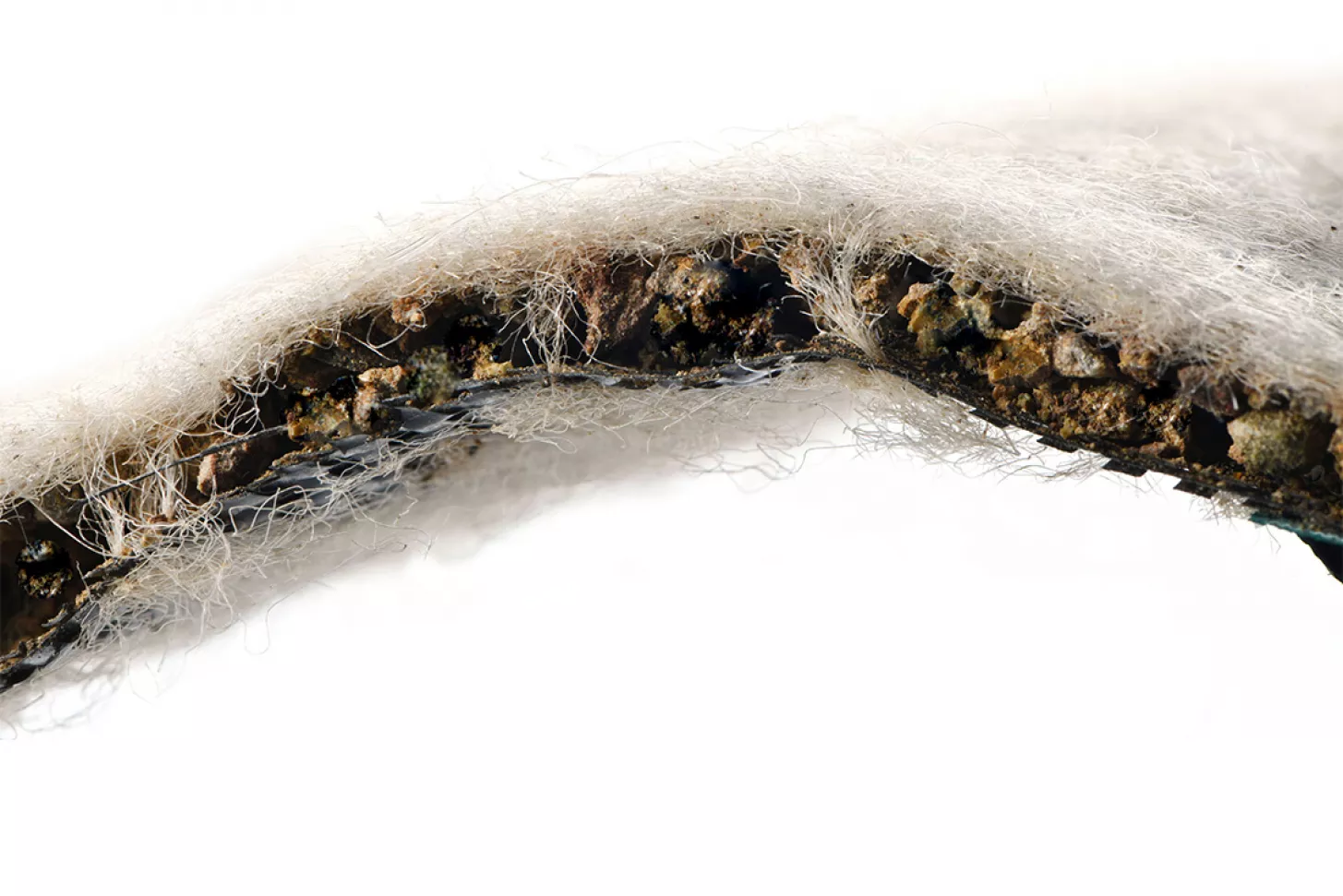
BECLAY geosynthetic clay liners consist of three main components: a geotextile cover layer, a uniformly distributed layer of bentonite granules, and a geotextile carrier layer. These layers are needle-punched together to form a compact, stable composite structure.
The key component of BECLAY liners is sodium bentonite, containing more than 90% montmorillonite. This clay mineral has a high swelling capacity when in contact with water, ensuring excellent sealing performance. The use of bentonite granules instead of powder minimizes dust formation and improves storage behavior.
Industrial production and continuous quality control ensure a homogeneous, reliable sealing layer with consistent impermeability.
Structure and Function
BECLAY
This variant consists of a geotextile cover layer, a middle layer of bentonite granules, and a geotextile carrier layer. The sandwich-like construction provides a uniform sealing layer with consistent performance. Full-surface needle punching ensures high shear strength and stability, even on slopes.
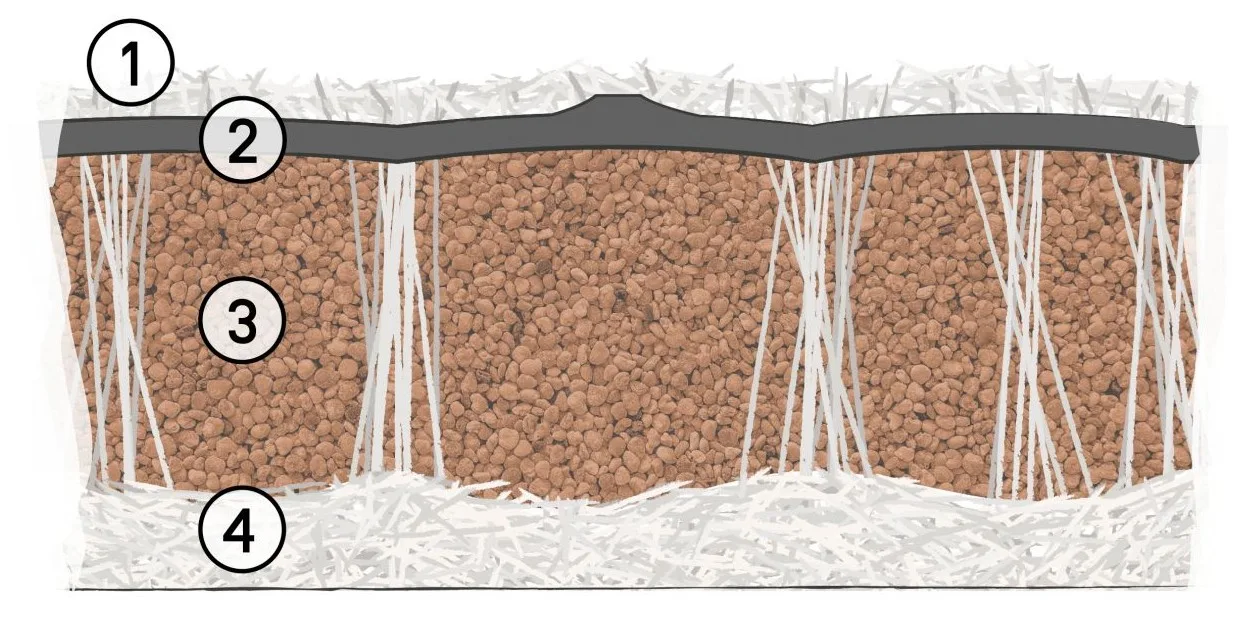
1 PP fibers | 2 PP woven geotextile | 3 Bentonite granules | 4 PP nonwoven fabric
BECLAY GDA CL
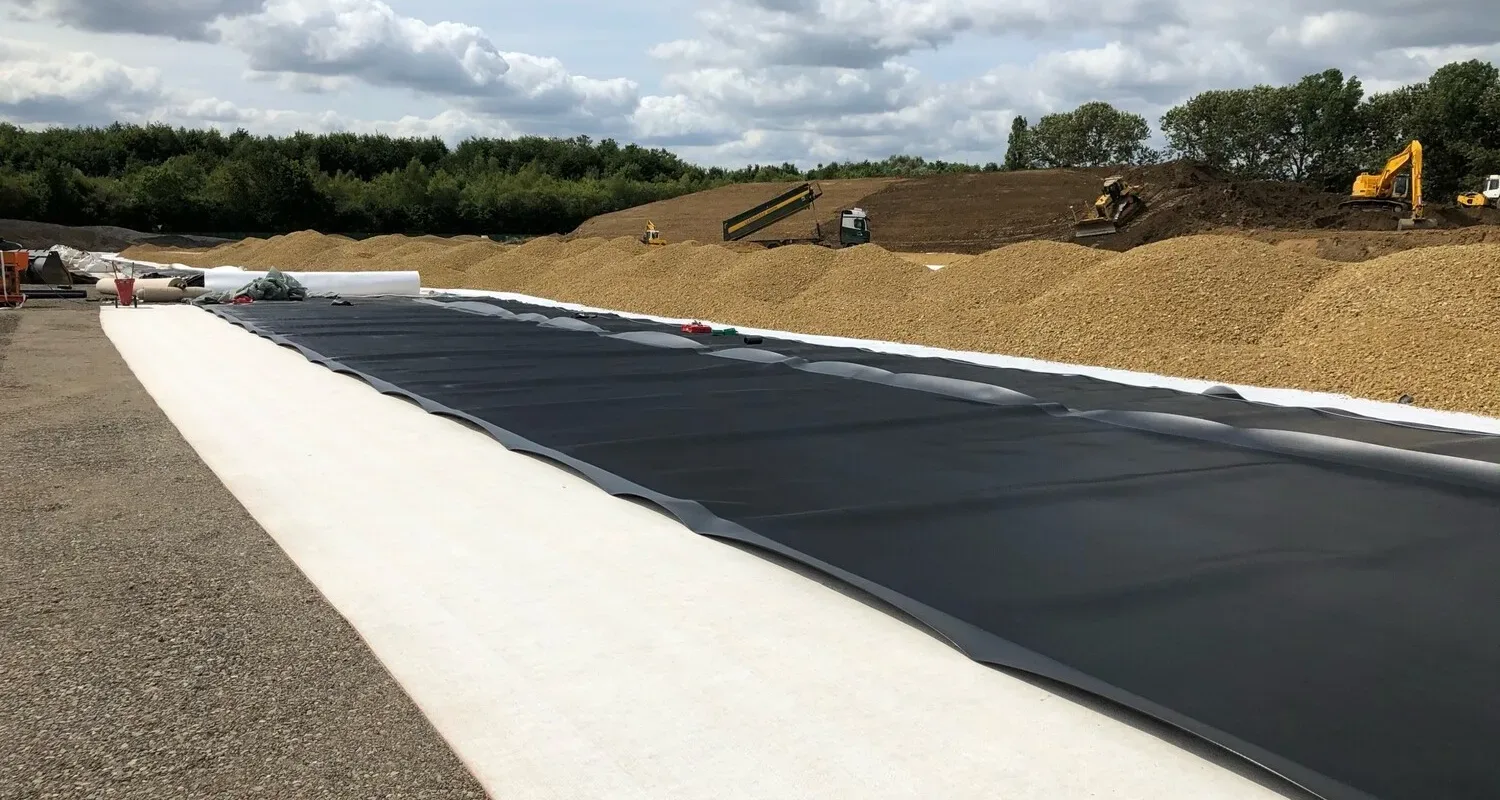
The BECLAY GDA CL variant includes an additional PE membrane laminated to the liner. This factory-applied film protects the bentonite from drying out and adds an extra barrier layer. BECLAY GDA CL is ideal for applications requiring enhanced sealing performance and separation properties.
Both variants utilize the natural swelling behavior of bentonite to form a self-healing, watertight layer upon contact with water. Minor damages are automatically sealed by the internal swelling pressure.

1 PE membrane | 2 PP woven geotextile | 3 Bentonite granules | 4 PP nonwoven fabric
Application Areas of BECLAY Geosynthetic Clay Liners
BECLAY geosynthetic clay liners are used in various civil and environmental engineering applications requiring a long-lasting liquid barrier. Typical areas of use include:

Rainwater retention basin
BECLAY liners are used to seal retention and storage basins, preventing water loss and separating groundwater from surface water.

Groundwater protection in traffic areas
In road and transport construction, BECLAY systems prevent hazardous substances from entering the groundwater. They comply with RiStWag guidelines (Guidelines for Structural Measures in Water Protection Zones) and contribute to sustainable environmental protection.

Multi-storey and underground car parks
BECLAY liners provide reliable and cost-effective waterproofing for foundation slabs in parking structures, preventing infiltration of liquids into the subgrade.
For Landfill sites and Remediation of Contaminated Sites we recommend using clay liners with LAGA approval. More information can be found here:
Technical Data
| Properties | GDA | 300/200 | GDA CL* |
|---|---|---|---|
| Product type | All-over needle-punched clay liner | All-over needle-punched clay liner with additional PE membrane |
|
| Raw material | Non-woven: PP. Inlay: Bentonite. Woven: PP |
Non-woven: PP. Inlay: Bentonite. Woven: PP. Membrane: PE |
|
| RiStWag Sealings | yes | yes | yes |
| Areas of application | |||
| Dike and hydraulic structures | ○ | ○ | ○ |
| Retention basins | ● | ● | ● |
| Road and traffic areas | ● | ● | ○ |
| Canal structures | ● | ● | ○ |
| Underground / multi-storey car parks | ○ | ● | ○ |
Sustainability and Resource Efficiency
BECLAY geosynthetic clay liners are particularly resource-efficient. Unlike compacted clay liners, which require layer thicknesses of up to 1 meter, BECLAY liners achieve equivalent sealing performance with a thickness of only about 1 cm. This results in significant savings in raw materials, transport, and energy.
For example, sealing a landfill area of 4,500 m² with a compacted clay liner would require approximately 2,250 m³ of clay, equivalent to around 175–225 truckloads. The same area can be sealed using just 22 rolls of BECLAY, requiring only one truckload. This reduces CO₂ emissions, transport effort, and construction time dramatically.
Using BECLAY contributes actively to sustainable construction and reduces the environmental impact of infrastructure projects.
200 truckloads
vs.
1 truckload
4,500 m² compacted clay liner (0.5 m thickness)
= 2.250 m³ of clay
4.500 m² BECLAY Geosynthetic Clay Liners
= 22 rolls

Installation of BECLAY Geosynthetic Clay Liners
The installation of BECLAY geosynthetic clay liners is quick and straightforward when the provided installation guidelines are followed.
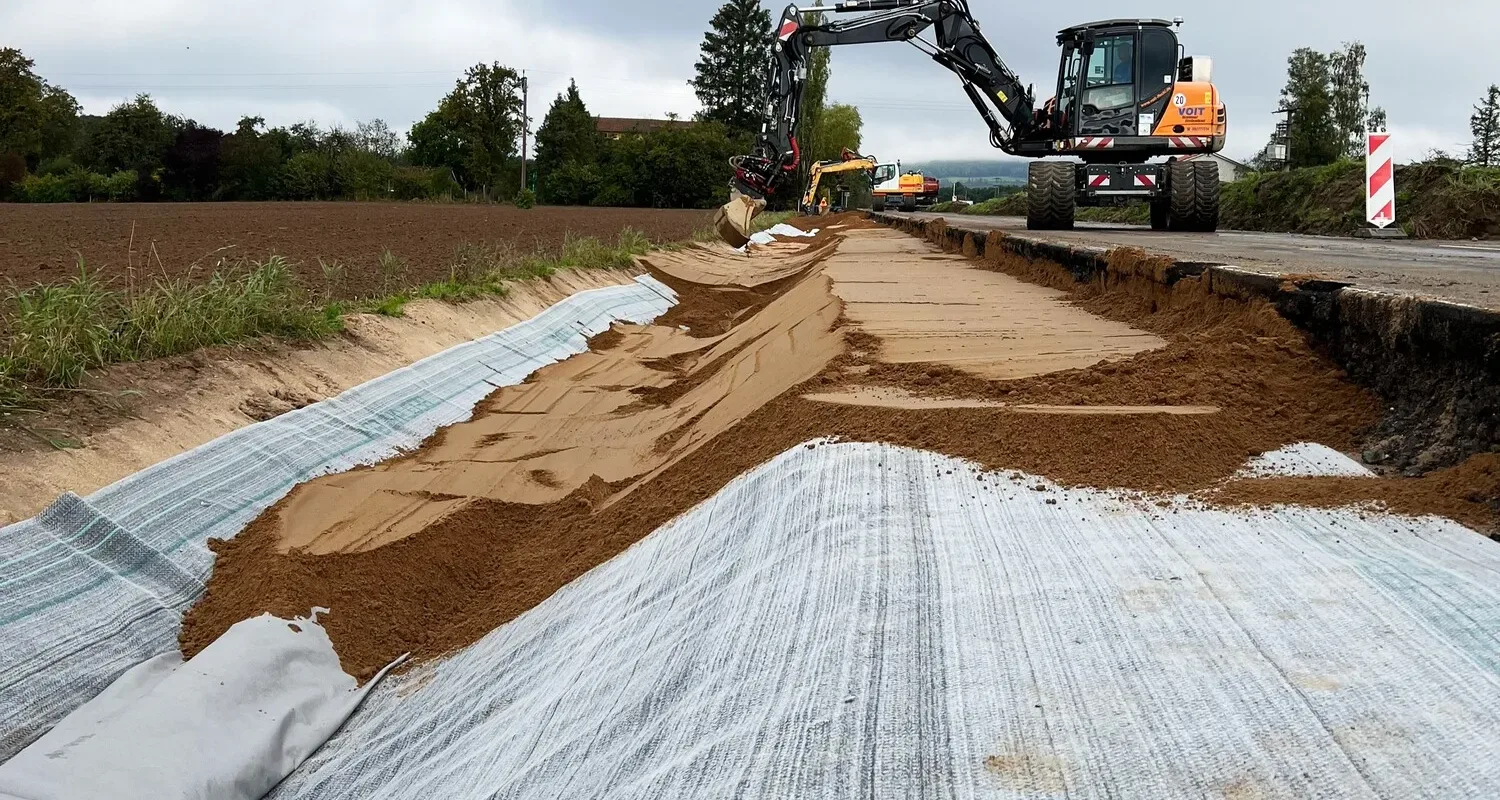
A flat, stable, and dry subgrade is essential. The liners are installed in the direction of the slope. The 30 cm wide, factory-marked overlap areas are sprinkled with loose bentonite granules to ensure a homogeneous and watertight joint.
After installation, BECLAY liners must be covered with appropriate backfill material on the same day to prevent uncontrolled hydration of the bentonite.
Comprehensive installation and project-specific instructions are available upon request.

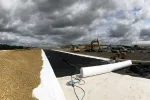
Gallery








Further information about:
BECLAY Geosynthetic Clay Liners
BECLAY Geosynthetic Clay Liners
No downloads found.
Further applications